
Evidence is reviewed for the applicable product form, project and batch.

Quality · analytics · batch release
Evidence tied
to the material.
Quality review begins with the exact molecular form and ends with records that connect the approved specification, applicable test results, pack presentation and supplied lot.
Quality principles
A product name is not a release specification.
Sequence, salt or counterion, hydration state, strength, purity target, analytical method and manufacturing route can change which data applies. We therefore confirm the requested material and document scope before treating a COA or identifier as relevant.
Lot references are kept consistent across documents and pack records.
Tests, methods, limits and deliverables are defined rather than assumed.
Batch release pathway
Eight checkpoints from inquiry to dispatch.
Each stage is applied according to the selected material and supply route. Final release criteria remain those stated in the approved quotation or technical agreement.
Requirement review
Product identity, molecular form, specification, quantity, presentation, destination and required documents are defined before approval.
Route qualification
The applicable stock, production or project route is reviewed against the requested material and commercial scope.
Material & batch identity
The product record is connected to an applicable batch or planned production reference.
In-process control
Synthesis, purification, solution handling or lyophilization checkpoints are applied as relevant to the agreed route.
Analytical review
Identity, purity and other agreed release attributes are reviewed using the methods included in the project scope.
Document matching
COA and applicable analytical records are checked against the product, strength, lot and material form.
Pack & label review
Unit presentation, lot fields, research-use statements, artwork and secondary packaging are matched to the approval record.
Release & traceability
The shipment record retains the agreed commercial, batch, pack and documentation references for follow-up.
Analytical scope
Ask which test answers which quality question.
HPLC purity, mass-spectrometry identity and peptide content are different measurements. The appropriate methods and limits depend on the molecule, material form and intended research workflow.
Test / attributePurposeAvailability
Appearance / material state
Visual description of the supplied material
Batch or project specificIdentity by MS / LC–MS
Identity-related mass-spectrometry information
Where applicable and agreedPurity by HPLC
Chromatographic purity-related profile
Where applicable and agreedPeptide content / assay
Quantitative content or assay method
Optional project scopeWater / Karl Fischer
Moisture determination for relevant materials
Optional project scopeResidual solvents
Method and limits based on the material route
Optional project scopeCounterion / salt content
TFA, acetate or other applicable counterion review
Optional project scopeEndotoxin / bioburden
Additional research-quality testing where relevant
Optional; not universalSterility or microbiology
Only when a written project scope specifically requires it
Custom scope onlyThis is a capability and scoping guide, not a promise that every test is included with every catalog item. Confirm the applicable methods, limits and deliverables in writing before order approval.
The release file
Documents should answer different questions—and match the same lot.
Qualified buyers can request the available batch file during quotation. Original documents remain product-, strength-, form- and lot-specific.
Summary of agreed release attributes and reported batch results.
Purity-related chromatographic output and applicable method context.
Identity-related molecular-mass information for the applicable material.
Product, strength, lot fields and approved presentation connected to supply.
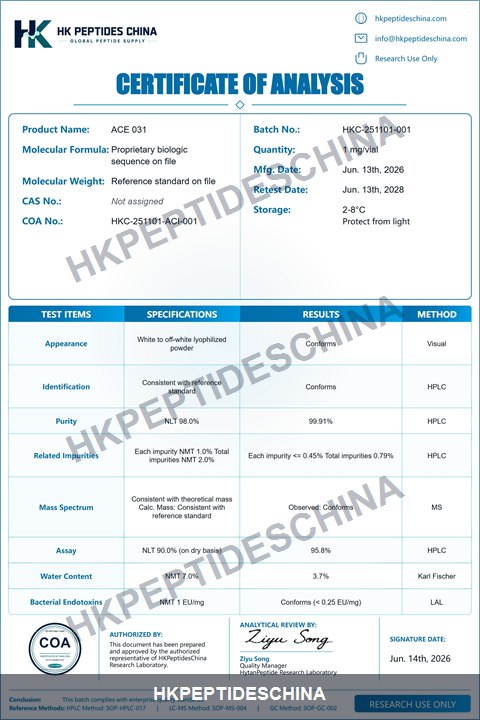
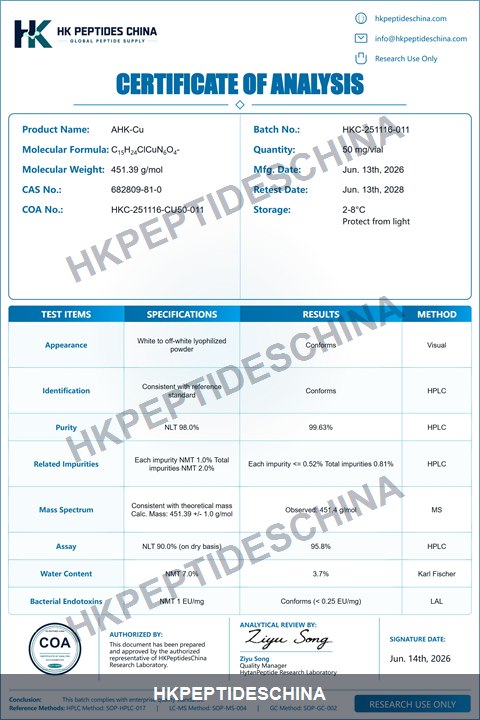
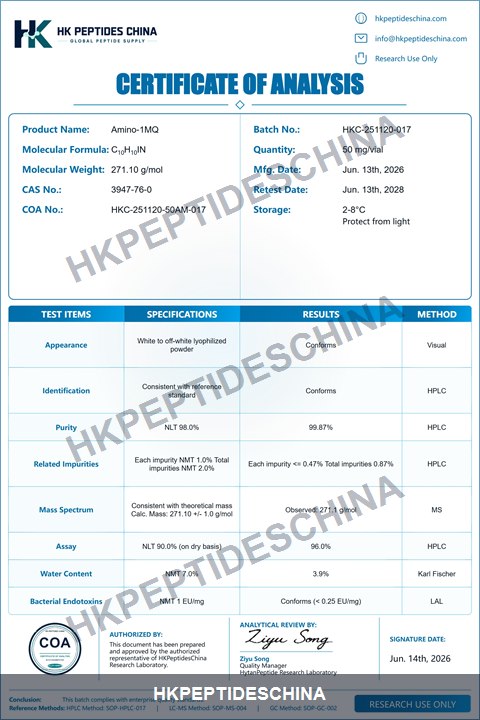
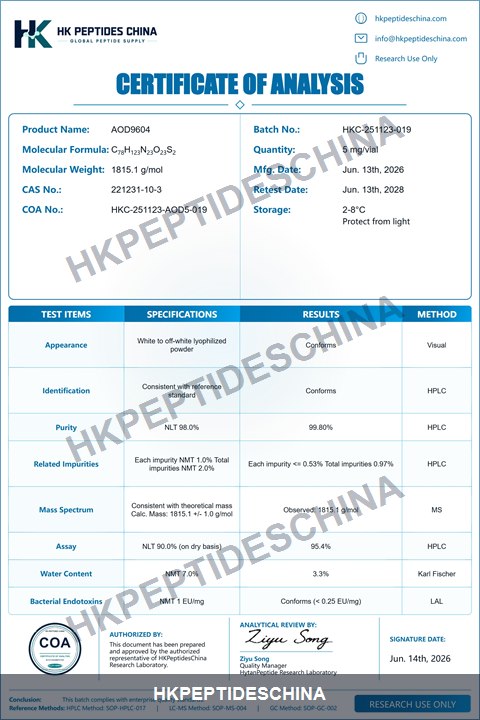
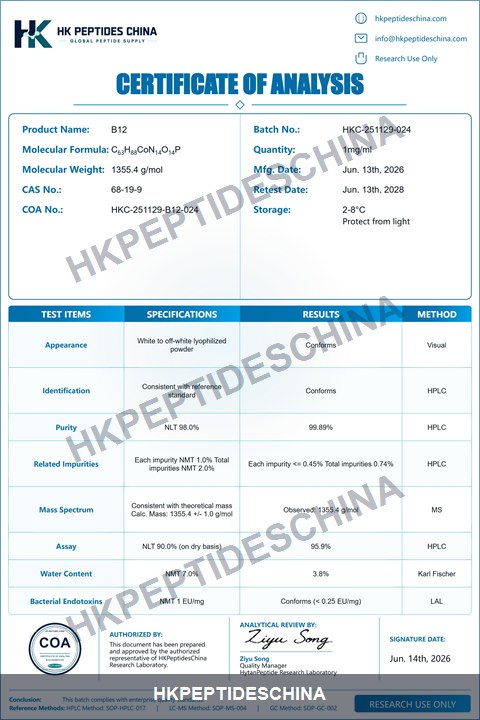
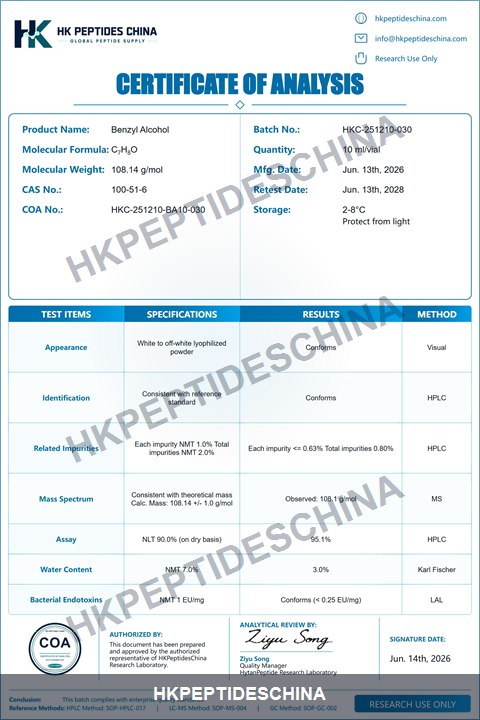
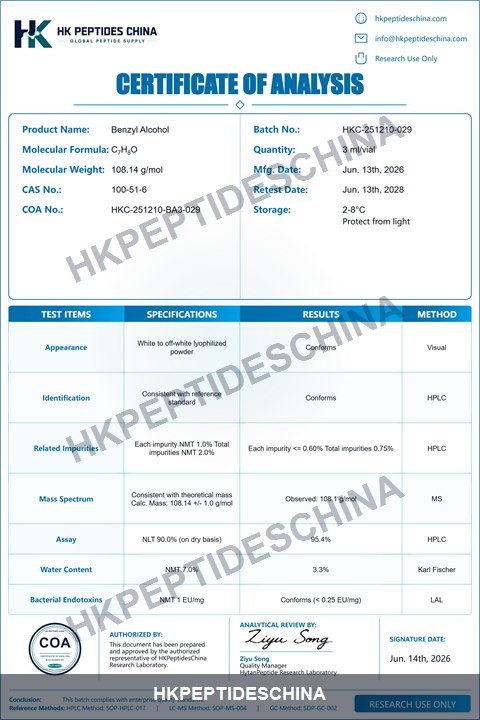
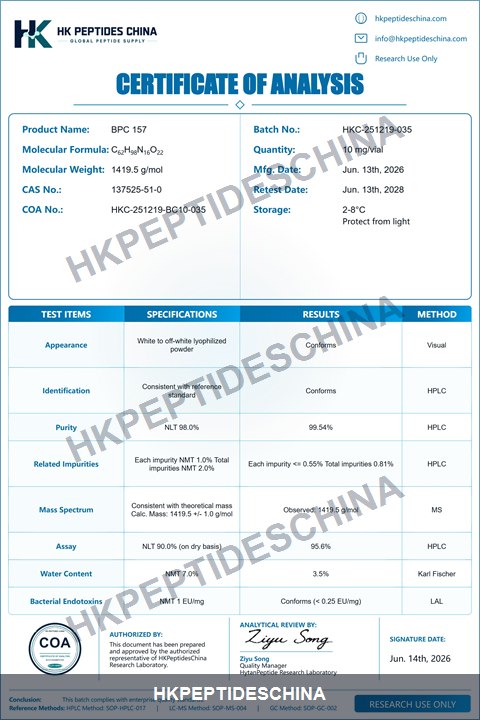
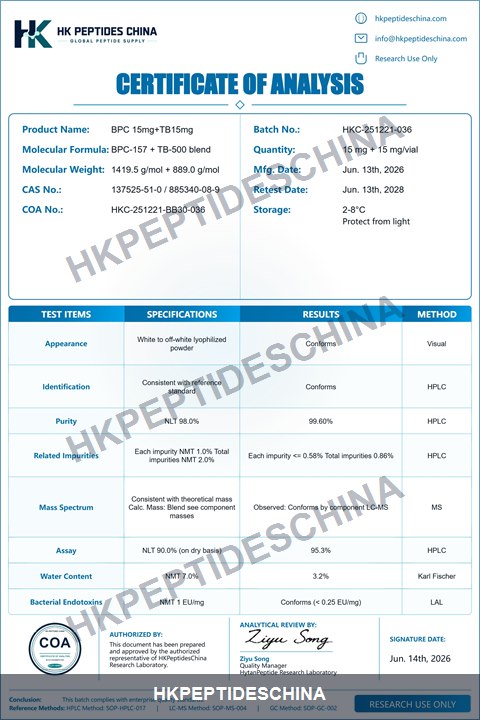
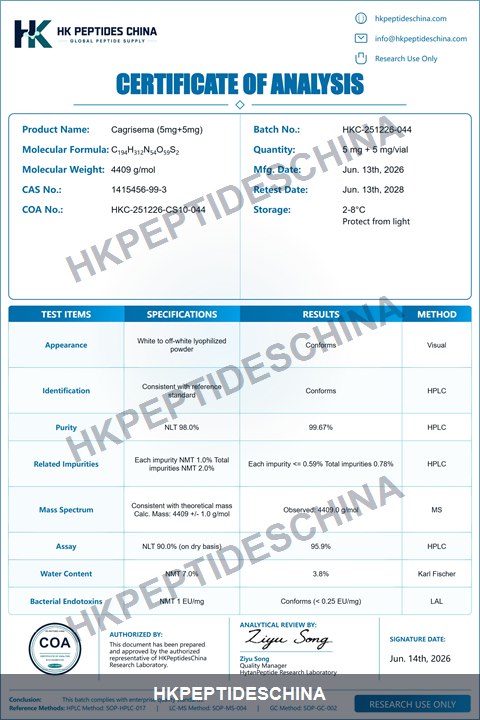
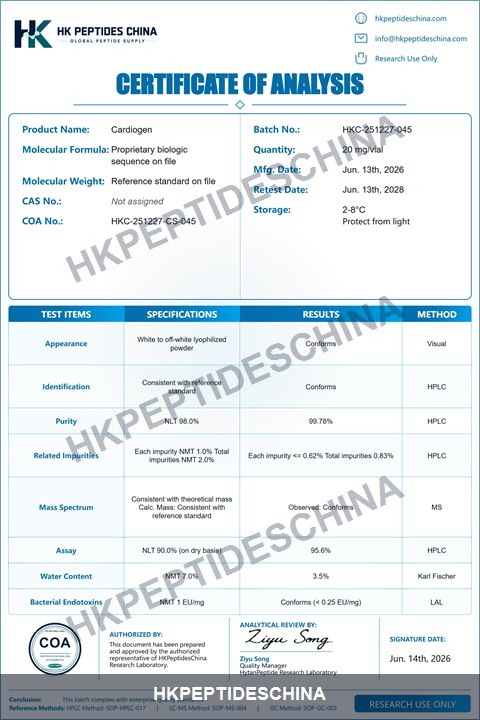
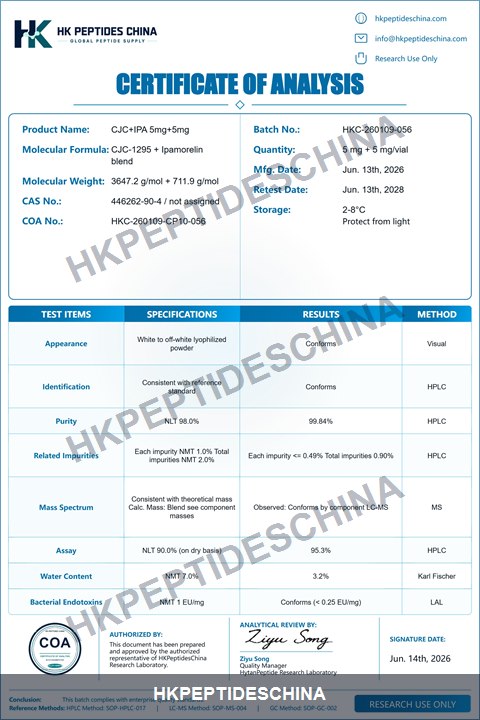
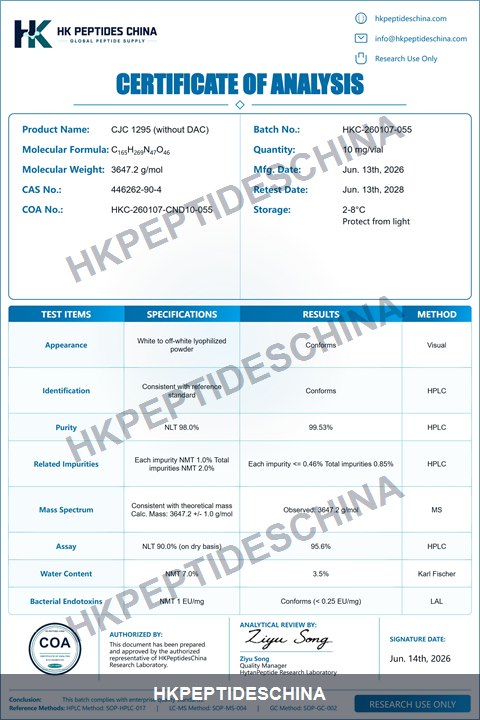
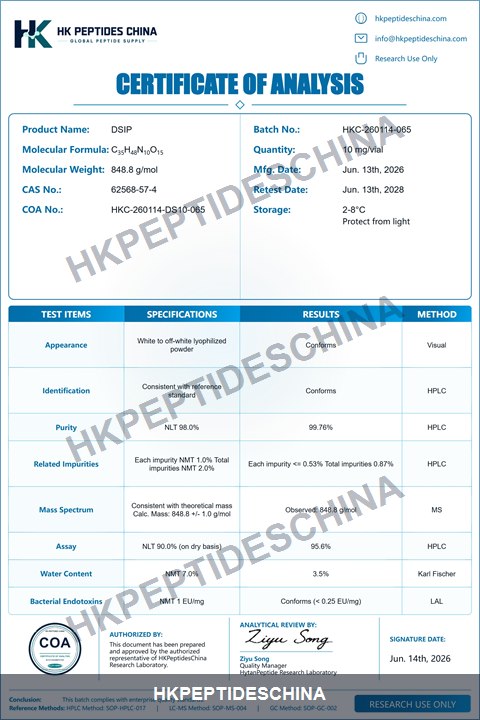
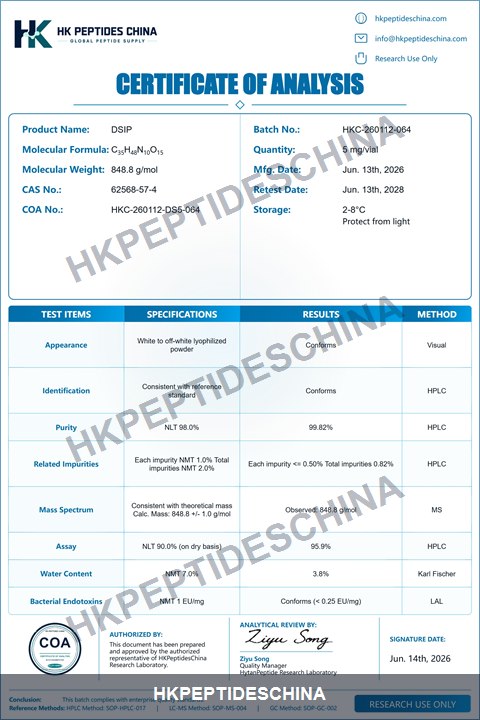
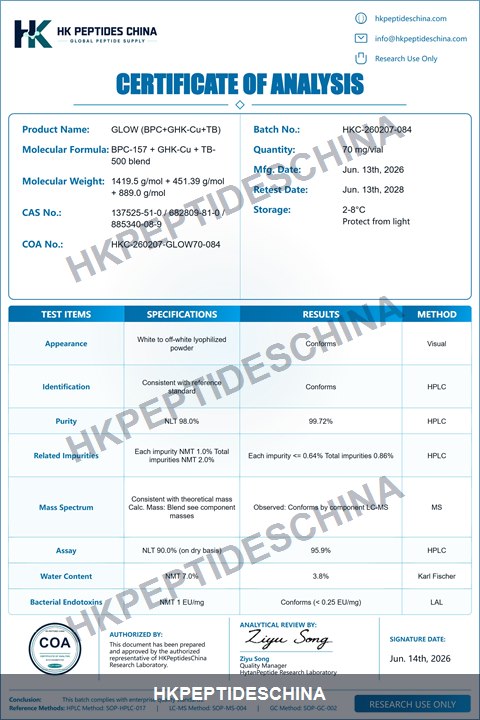
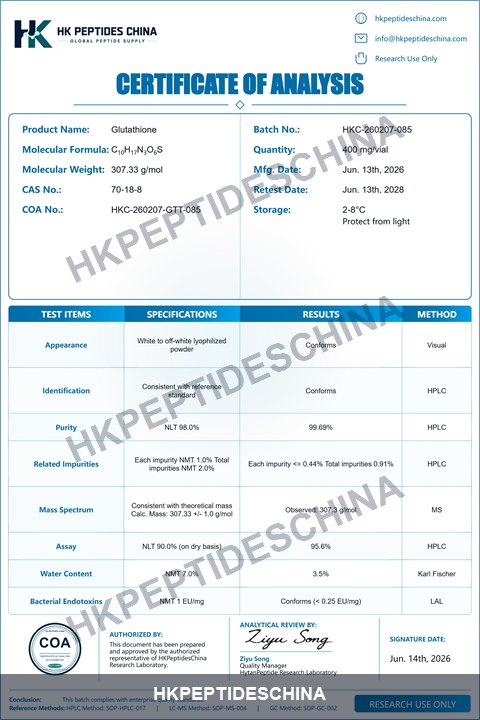
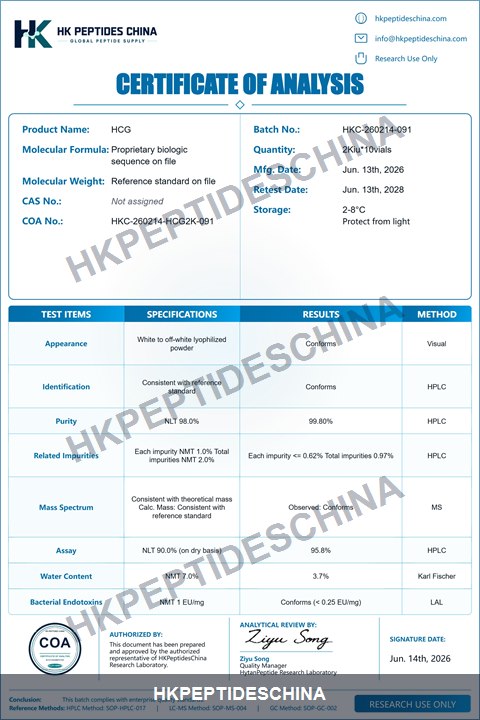
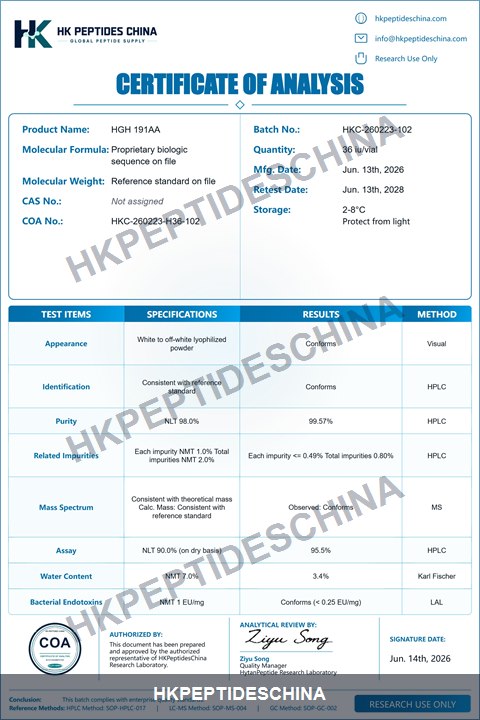
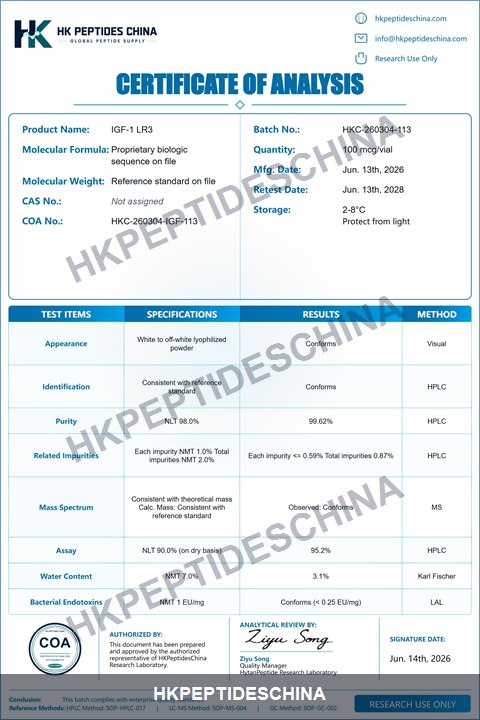
Batch documentation previews
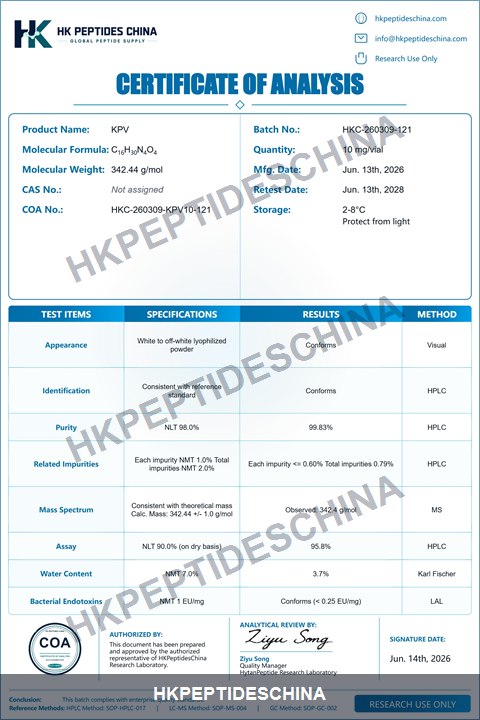
Watermarked COA examples · Request the applicable product and lot document below.
After release
Quality work continues after the shipment record is created.
Record continuity
Commercial, batch, documentation and pack references are retained for qualified follow-up.
Material changes are reviewed
A change in route, form, specification, test scope or packaging should be assessed before the next approved supply.
Evidence-led investigation
Report the product, lot, quantity, photographs, storage history and observed issue so the applicable record can be reviewed.
Variables are reconfirmed
Repeat orders use the prior scope as a reference while availability, batch and time-sensitive documents are checked again.
Important distinction
COA, GMP and DMF are not interchangeable claims.
A COA reports results for a defined material and batch. GMP describes a regulated manufacturing quality system within an applicable scope. A DMF is a confidential regulatory submission held by a specific party and may support an authorized filing; it is not a universal certificate for every catalog listing.
Manufacturing route, quality grade, certificate status, DMF holder, market and Letter of Authorization availability must be confirmed for the selected project.
Build the right quality brief
Tell us what your procurement file must contain.
Include product form, quantity, target specification, methods, destination and any supplier-qualification requirements.